
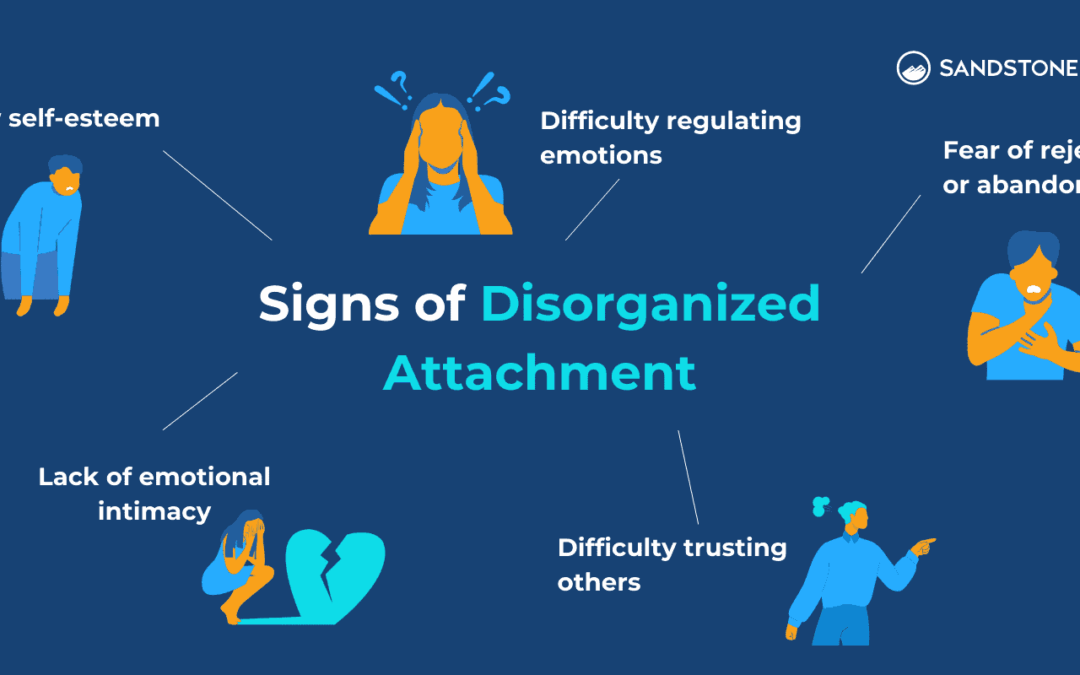
Disorganized Attachment: When Safety and Fear Coexist
Human beings are wired for connection. From the moment we are born, our nervous system looks for signals of safety in the people around us. When caregivers are consistently safe, responsive, and predictable, the nervous system learns that relationships are a place of comfort. But when the very person who is supposed to provide safety is also a source of fear, the nervous system receives a confusing message: the place I go for safety is also the place I get hurt.
This is the core experience of disorganized attachment.
Disorganized attachment is often the most misunderstood attachment style because it can look contradictory on the surface. Someone may deeply crave closeness and intimacy, yet panic or pull away the moment they receive it. They may long for reassurance, but struggle to trust it when it arrives.
Underneath these patterns is a nervous system that learned early in life that connection and danger can exist at the same time.
What Is Disorganized Attachment?
Disorganized attachment develops when a child experiences caregivers who are inconsistent, frightening, emotionally unpredictable, or unavailable in moments of distress.
In other attachment styles, the nervous system learns a clear strategy for survival:
-
Anxious attachment: Move toward others to get reassurance.
-
Avoidant attachment: Move away from others to stay safe.
With disorganized attachment, however, the nervous system doesn’t have one clear strategy. Instead, it holds two opposing survival responses at once.
Approach for safety.
Avoid to protect from danger.
This internal conflict can create a push-pull dynamic in relationships that feels confusing not only to partners but to the person experiencing it.
The Nervous System Behind Disorganized Attachment
To understand disorganized attachment, it helps to look at it through the lens of the nervous system.
Our bodies constantly scan the environment for cues of safety or threat. When the nervous system detects safety, it allows us to relax, connect, and engage socially. When it senses danger, it activates survival responses like fight, flight, or shutdown.
For someone with disorganized attachment, early experiences may have taught the nervous system that the attachment figure was both safe and unsafe.
This creates what psychologists sometimes refer to as a biological paradox:
The person you instinctively move toward for comfort is also the person your body may want to escape from.
As a result, the nervous system can rapidly shift between states:
-
Seeking closeness and reassurance
-
Feeling overwhelmed by intimacy
-
Becoming hypervigilant about rejection
-
Shutting down emotionally or withdrawing
These shifts are not signs of being “too much” or “difficult.” They are protective adaptations the nervous system developed to survive confusing relational environments.
How Disorganized Attachment Shows Up in Adult Relationships
In adulthood, these early nervous system patterns can influence how someone experiences intimacy, conflict, and emotional safety.
Common experiences may include:
Intense desire for closeness
People with disorganized attachment often deeply value connection and may long for a relationship where they feel truly safe.
Fear of abandonment and fear of closeness
There can be anxiety about being left, while at the same time feeling overwhelmed or suspicious when someone gets too close.
Push–pull relationship patterns
Someone may seek reassurance during moments of insecurity but later withdraw or create distance when the relationship feels emotionally intense.
Difficulty trusting safety
Even when a partner shows care, consistency, and love, the nervous system may struggle to believe that safety will last.
Emotional overwhelm during conflict
Disagreements may activate deep fears of rejection, criticism, or loss, leading to heightened emotional responses or shutdown.
These patterns are often misunderstood as manipulation, inconsistency, or instability. In reality, they are usually the nervous system trying to manage two competing survival instincts at once.
The Hidden Strength of Disorganized Attachment
While disorganized attachment can create challenges in relationships, it also carries profound strengths.
People with this attachment style often develop:
-
Deep emotional sensitivity
-
Strong empathy for others’ pain
-
A powerful desire for authentic connection
-
High self-awareness through healing work
Because they have experienced both closeness and fear in relationships, many become deeply committed to understanding themselves and creating healthier relational patterns.
Healing is not about eliminating attachment needs—it is about teaching the nervous system that connection can be safe again.
Healing Disorganized Attachment
Healing disorganized attachment doesn’t happen through logic alone. Because these patterns live in the nervous system, healing involves experiences that slowly build a new sense of safety in connection.
Some supportive pathways include:
Nervous System Regulation
Practices that calm and stabilize the nervous system can help reduce the intensity of attachment triggers. This may include:
-
Breathwork
-
Grounding exercises
-
Body-based therapies
-
Mindful movement
These tools help the body move out of survival states and back into a state where connection feels possible.
Safe Relationships
Consistent, emotionally safe relationships—whether with partners, friends, or therapists—can gradually reshape attachment patterns. When the nervous system repeatedly experiences reliability and care, it begins to update its expectations of connection.
Self-Compassion
Many people with disorganized attachment carry shame about their reactions in relationships. Learning to approach these patterns with compassion rather than judgment is a crucial part of healing.
Your responses were not flaws.
They were adaptations to environments where safety was unclear.
Awareness of Triggers
Understanding what activates your nervous system can help you pause and respond more intentionally rather than reacting automatically.
Healing often begins with a simple shift:
Instead of asking “What’s wrong with me?”
we start asking “What happened to my nervous system?”
Moving Toward Secure Connection
Disorganized attachment is not a life sentence. The brain and nervous system remain capable of change throughout our lives.
With supportive relationships, nervous system regulation, and self-awareness, many people move toward what psychologists call earned secure attachment—a state where connection feels safer, trust grows more easily, and relationships become less dominated by fear.
Healing does not mean you will never feel triggered again.
It means that when fear and connection show up together, safety begins to win more often than fear.
And over time, the nervous system learns something it may not have fully believed before:
Connection can be safe.
Love can be steady.
And relationships do not have to feel like survival.
Resources:
- Attached: The New Science of Adult Attachment and How It Can Help You Find–and Keep–Love https://amzn.to/3Va69fd
- Anchored https://amzn.to/3VcsQ2m
- https://www.youtube.com/@TimFletcher
- Poly vagal Card Deck https://amzn.to/4pfNiwU
- Accessing The Healing Power Of The Vagus Nerve By: Stanley Rosenberg https://amzn.to/4n85Rld
- The Body Keeps the Score: Brain, Mind, and Body in the Healing of Trauma By: Bessel van der Kolk https://amzn.to/4mTBcYN
- The Trauma Spectrum: Hidden Wounds and Human Resiliency https://amzn.to/47yiNMm
- The Body Bears the Burden: Trauma, Dissociation, and Disease https://amzn.to/4ghL2kC
