There are moments when the body doesn’t fight. It doesn’t flee. It simply shuts down.
You may find yourself unable to answer a text, speak during conflict, make a decision, leave the couch, or even explain what’s wrong. Your mind may go blank. Your chest may feel heavy. You might feel disconnected from yourself, emotionally numb, or stuck in place while part of you silently screams to move.
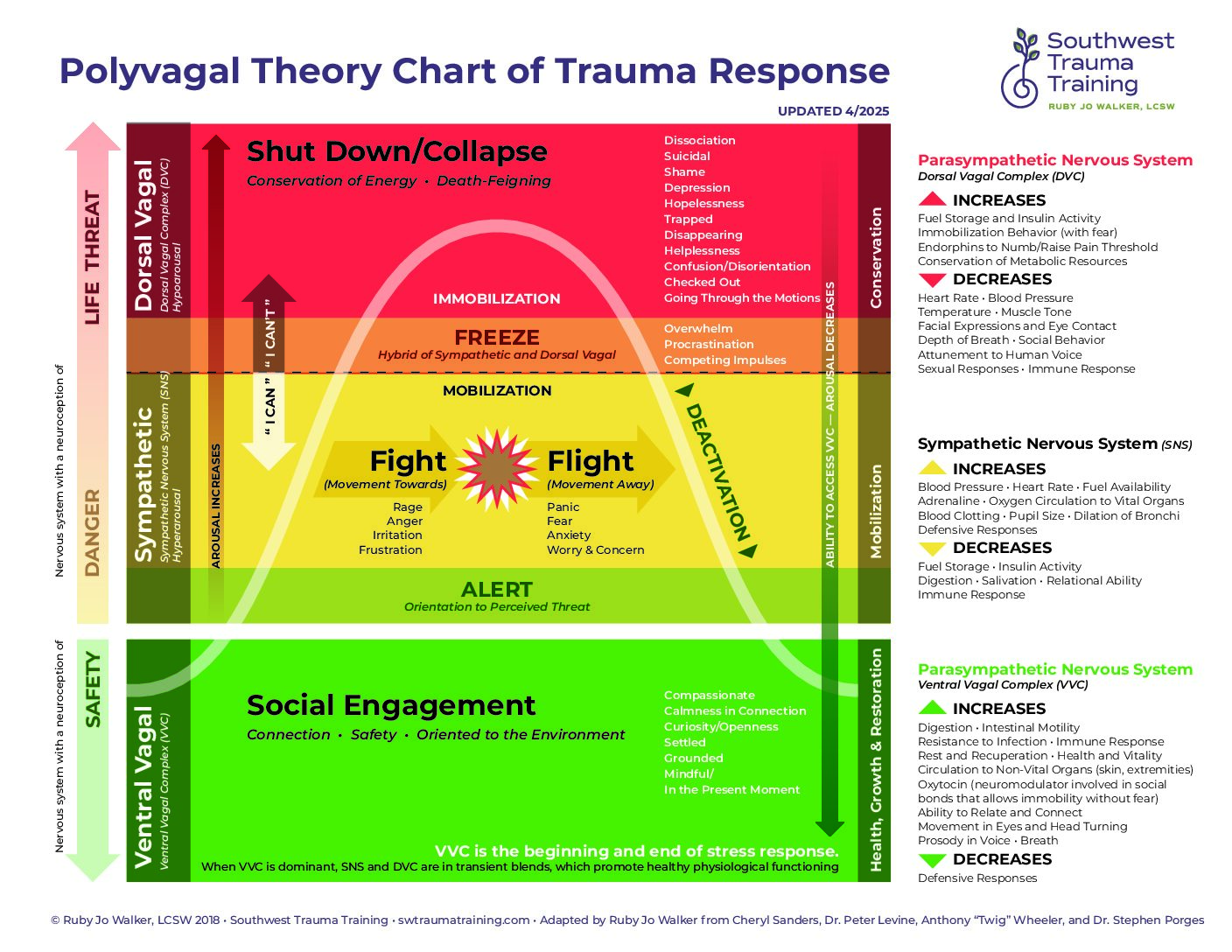
This is often called a freeze response — a nervous system survival state that happens when the brain perceives overwhelm, danger, helplessness, or emotional threat.
Freeze is not laziness.
It is not weakness.
And it is not a character flaw.
It is a protective response wired into the human nervous system.
What Is the Freeze Response?
The freeze response is part of the autonomic nervous system’s survival circuitry. Most people are familiar with “fight or flight,” but there are actually several protective states the body can move through when stress or danger is perceived.
When the nervous system believes:
- fighting won’t work,
- escaping isn’t possible,
- or overwhelm feels too great,
the body may shift into freeze.
This can look like:
- shutting down emotionally,
- becoming immobilized,
- dissociating,
- overthinking without action,
- feeling numb or disconnected,
- difficulty speaking or communicating,
- people pleasing while internally shutting down,
- indecision or mental paralysis,
- exhaustion after stress or conflict.
Freeze often develops as an adaptive survival strategy, especially in environments where someone felt emotionally unsafe, trapped, criticized, unpredictable stress, chronic overwhelm, or unable to express needs safely.
The Science Behind Freeze
From a polyvagal perspective, freeze is associated with the dorsal vagal state — a protective shutdown response designed to conserve energy and reduce perceived threat.
When the nervous system detects safety, we tend to feel:
- connected,
- present,
- emotionally flexible,
- able to think clearly and engage with others.
When danger is perceived, the nervous system shifts into survival modes.
Fight or flight activates energy and mobilization. Freeze, however, is different. It is immobilization.
The body essentially says:
“I don’t know how to survive this, so I’m shutting things down.”
This can happen during:
- conflict,
- emotional overwhelm,
- trauma reminders,
- burnout,
- relationship stress,
- high pressure environments,
- or even seemingly small tasks when the nervous system is already overloaded.
What Freeze Can Feel Like
People often misunderstand freeze because it doesn’t always look dramatic from the outside.
Internally, freeze can feel like:
- “I know what I need to do, but I physically can’t start.”
- “My brain stops working during conflict.”
- “I go blank when people ask me questions.”
- “I shut down emotionally.”
- “I feel stuck in my head.”
- “Everything feels too overwhelming.”
- “I want connection, but I withdraw.”
- “I can’t make simple decisions.”
- “I feel exhausted all the time.”
Some people experience freeze as numbness.
Others experience it as chronic anxiety paired with inaction.
Some alternate between hyper-productivity and complete shutdown.
Freeze can also coexist with:
- perfectionism,
- people pleasing,
- hypervigilance,
- dissociation,
- chronic stress,
- binge eating,
- avoidance,
- or emotional exhaustion.
Why Freeze Often Creates Shame
Many people judge themselves harshly for freeze responses because society tends to value productivity, decisiveness, and emotional control.
So instead of recognizing a nervous system survival state, people often tell themselves:
- “I’m lazy.”
- “I’m dramatic.”
- “I’m broken.”
- “Why can’t I just do it?”
- “Other people handle this fine.”
- “I should be stronger.”
But freeze is not a conscious choice.
The nervous system is attempting to protect you from perceived overload or danger, even when the response no longer matches the present moment.
This is especially common in people who grew up needing to suppress emotions, stay small, avoid conflict, or constantly monitor the emotional environment around them.
Over time, the body learns:
“Shutting down keeps me safer than expressing myself.”
How to Work With Freeze Instead of Fighting It
Healing freeze responses is rarely about forcing yourself harder.
In fact, intense self-criticism often pushes the nervous system deeper into shutdown.
Instead, healing usually begins with helping the body experience safety, regulation, and manageable movement.
1. Start Small
When frozen, the nervous system often cannot tolerate huge demands.
Instead of:
- “I need to fix my whole life,”
try:
- “Can I stand up?”
- “Can I drink water?”
- “Can I answer one email?”
- “Can I step outside for two minutes?”
Small actions help signal movement and safety to the nervous system.
2. Reduce Overwhelm
Freeze thrives in overload.
Sometimes the goal is not productivity — it is reducing nervous system threat.
This may include:
- lowering unrealistic expectations,
- simplifying decisions,
- reducing stimulation,
- creating structure,
- asking for support,
- resting without guilt.
3. Use the Body First
Because freeze is physiological, cognitive insight alone may not fully shift it.
Helpful regulation tools can include:
- grounding exercises,
- deep pressure,
- gentle movement,
- stretching,
- bilateral movement,
- slow breathing,
- humming or singing,
- warm showers,
- orienting to your environment,
- connecting with safe people.
The body often needs evidence of safety before the mind can fully engage again.
4. Notice Self-Criticism
Many freeze responses become worse because of the shame layered on top of them.
Try noticing:
- What happens internally when I criticize myself?
- Does shame increase movement or deepen shutdown?
- What would supportive self-talk sound like instead?
Compassion does not mean avoiding accountability. It means understanding that healing happens more effectively through safety than punishment.
5. Explore the Root Patterns
Freeze responses often make sense in context.
Therapy, nervous system work, trauma-informed approaches, and self-reflection can help uncover:
- when freeze first developed,
- what situations trigger it,
- how the body learned shutdown as protection,
- and what safety now looks like in adulthood.
You Are Not Failing — Your Nervous System Is Protecting You
Freeze responses can feel isolating because they are often invisible to others.
People may only see avoidance, indecision, withdrawal, or lack of motivation. They may not see the internal overwhelm underneath it all.
But many freeze responses are rooted in survival adaptations that once served an important purpose.
Healing is not about becoming productive enough to earn worth.
It is about helping the nervous system learn:
“I am safe enough to stay present now.”
And that learning usually happens slowly, gently, and consistently — one small moment of safety at a time.